
AI-First GTM & Marketing
After 15+ years running Marketing and GTM functions, I'm now rebuilding many of those same functions for an AI-Native operating model.
The work here focuses on how AI changes the workflow, decision system, governance, and economics of a function. This is the next step beyond simply automating existing tasks.
For examples of how I've led these functions in-market across companies and stages, see the Marketing & GTM Portfolio.
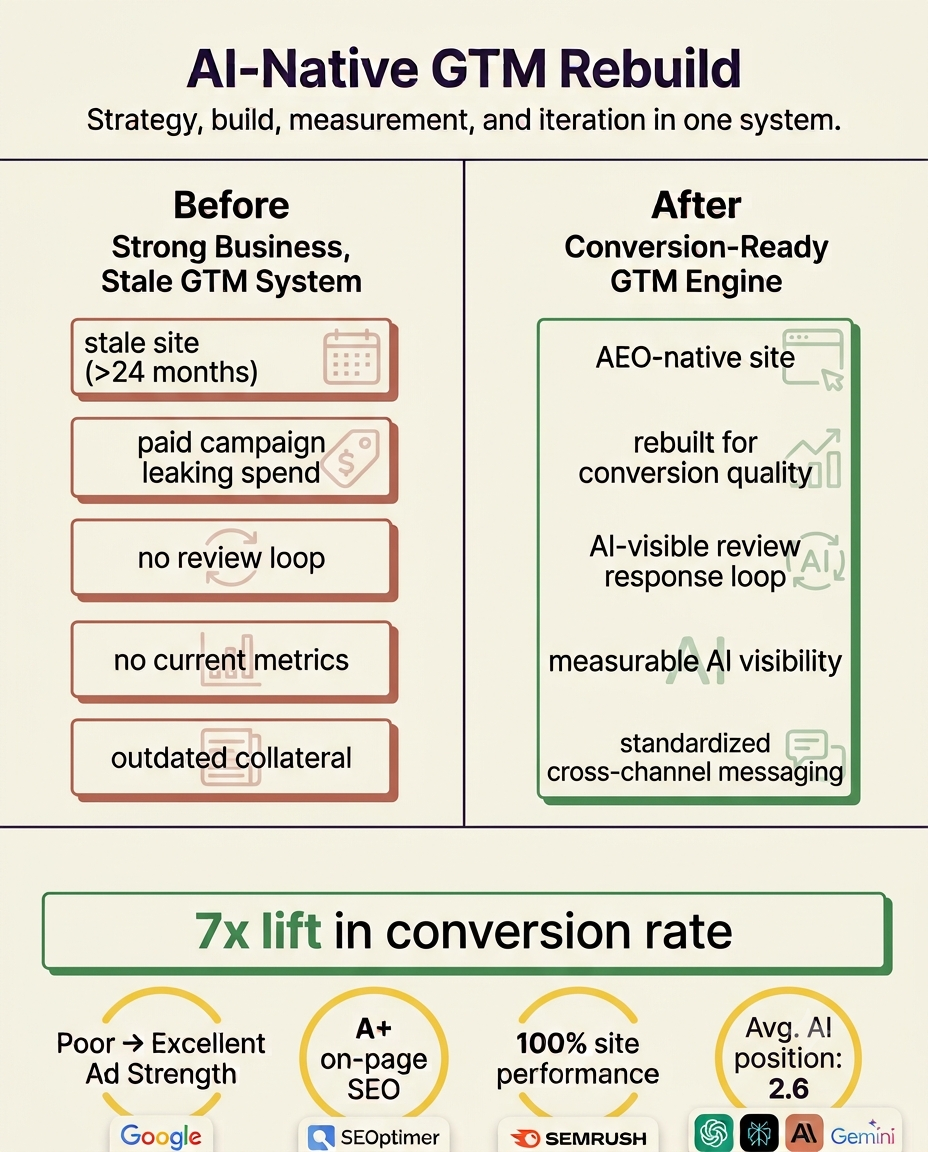
B2C Growth Rebuild - an established brand rebuilt around an AI-Native operating model. 7x conversion and 43% lower CPL on flat paid spend.
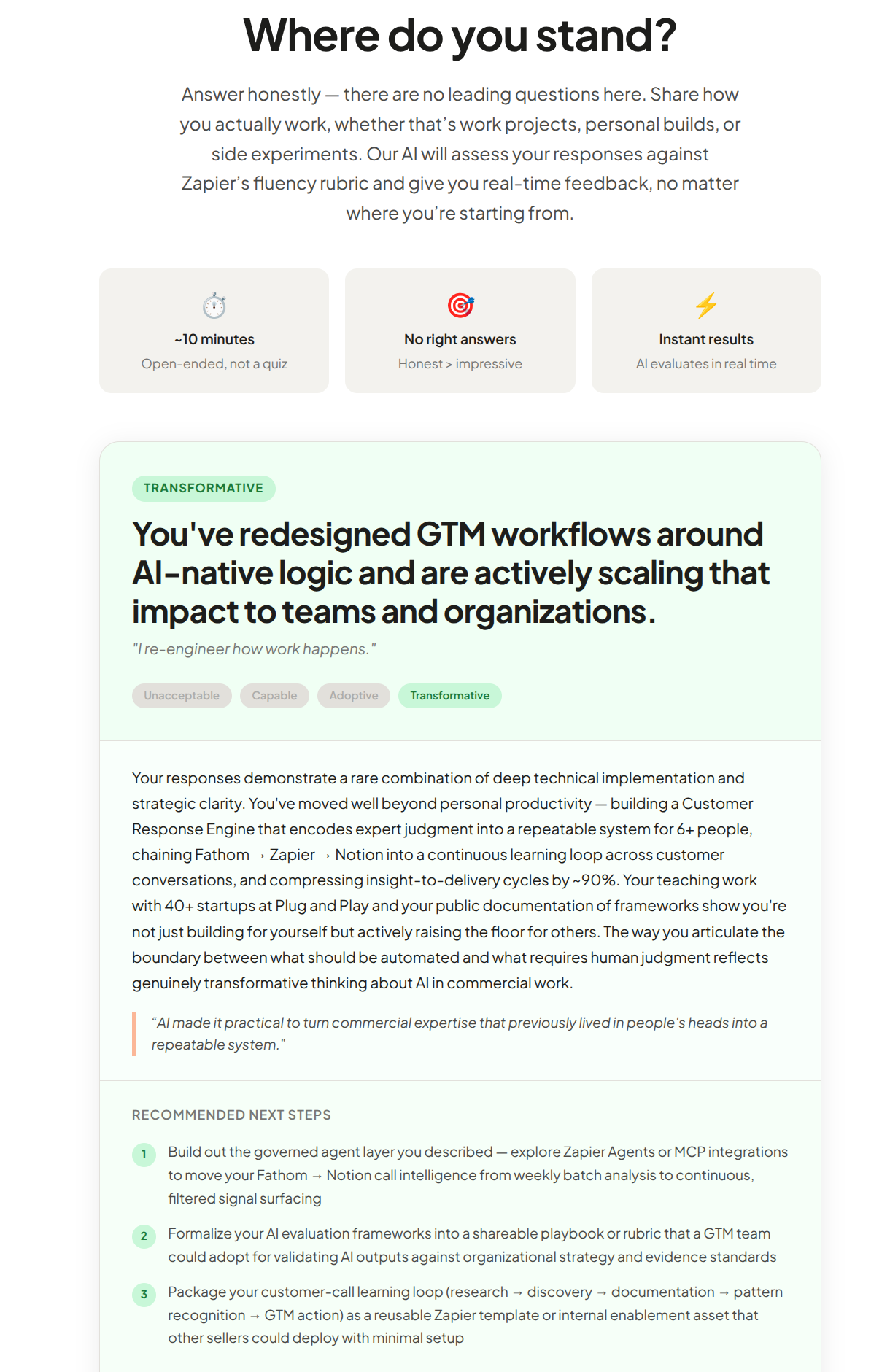
AI Operating Capability assessed as "Transformative" - the highest level of an AI fluency rubric published by industry leader Zapier(opens in a new tab).
How I moved from prompting to designing systems(opens in a new tab)
The Operating Model
What changes when AI is designed into the system rather than added to it.
- Shipped ToolTool: GTM Decision Engine - A portable decision system that makes criteria, evidence, tradeoffs, and human accountability inspectable.
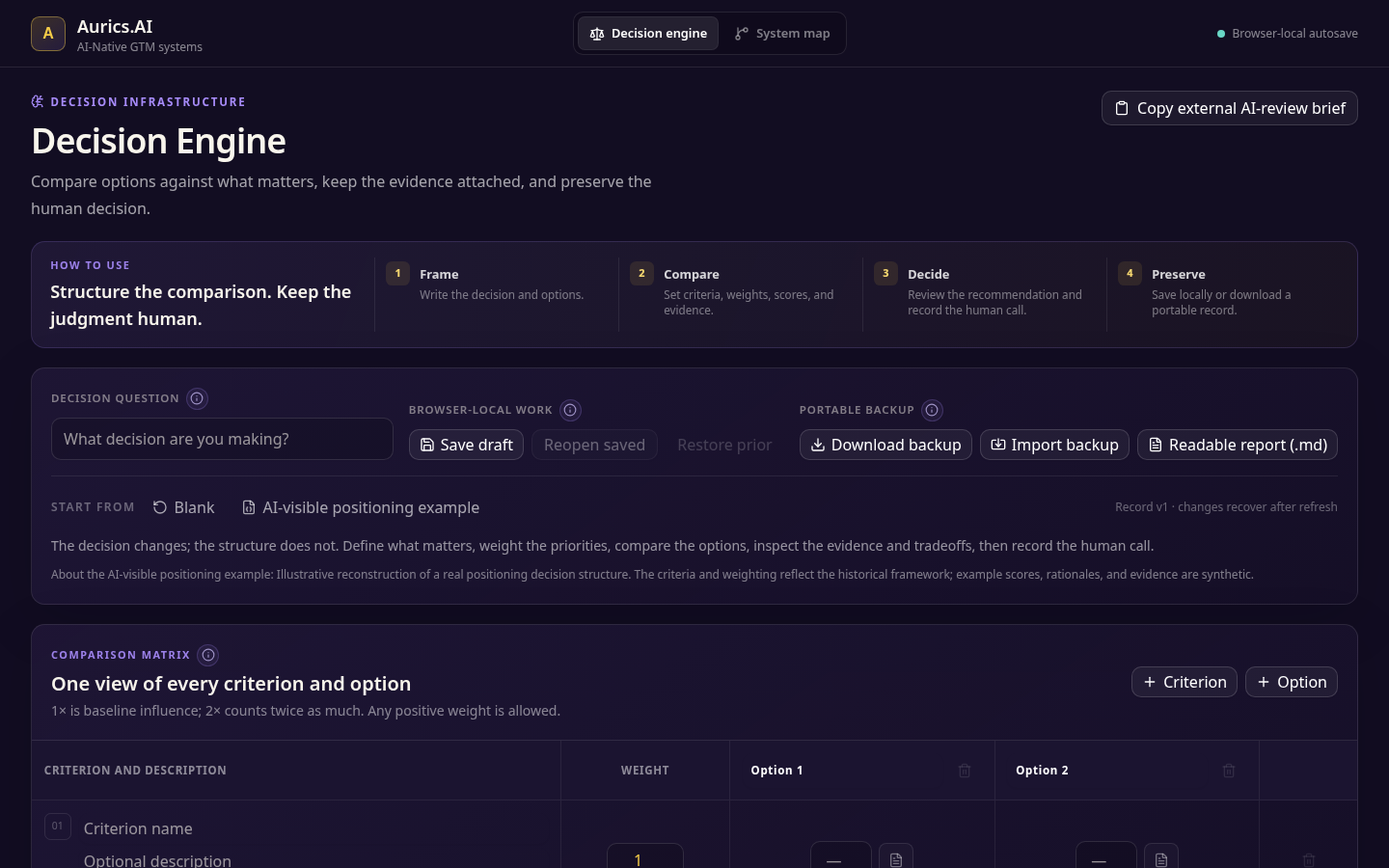
The Decision Engine: frame, compare, decide, preserve. - Experience: What Is AI-Native GTM - and How Can Any Company Apply It?(opens in a new tab) - The distinction most companies miss: making traditional GTM faster is not the same as making it adaptive.
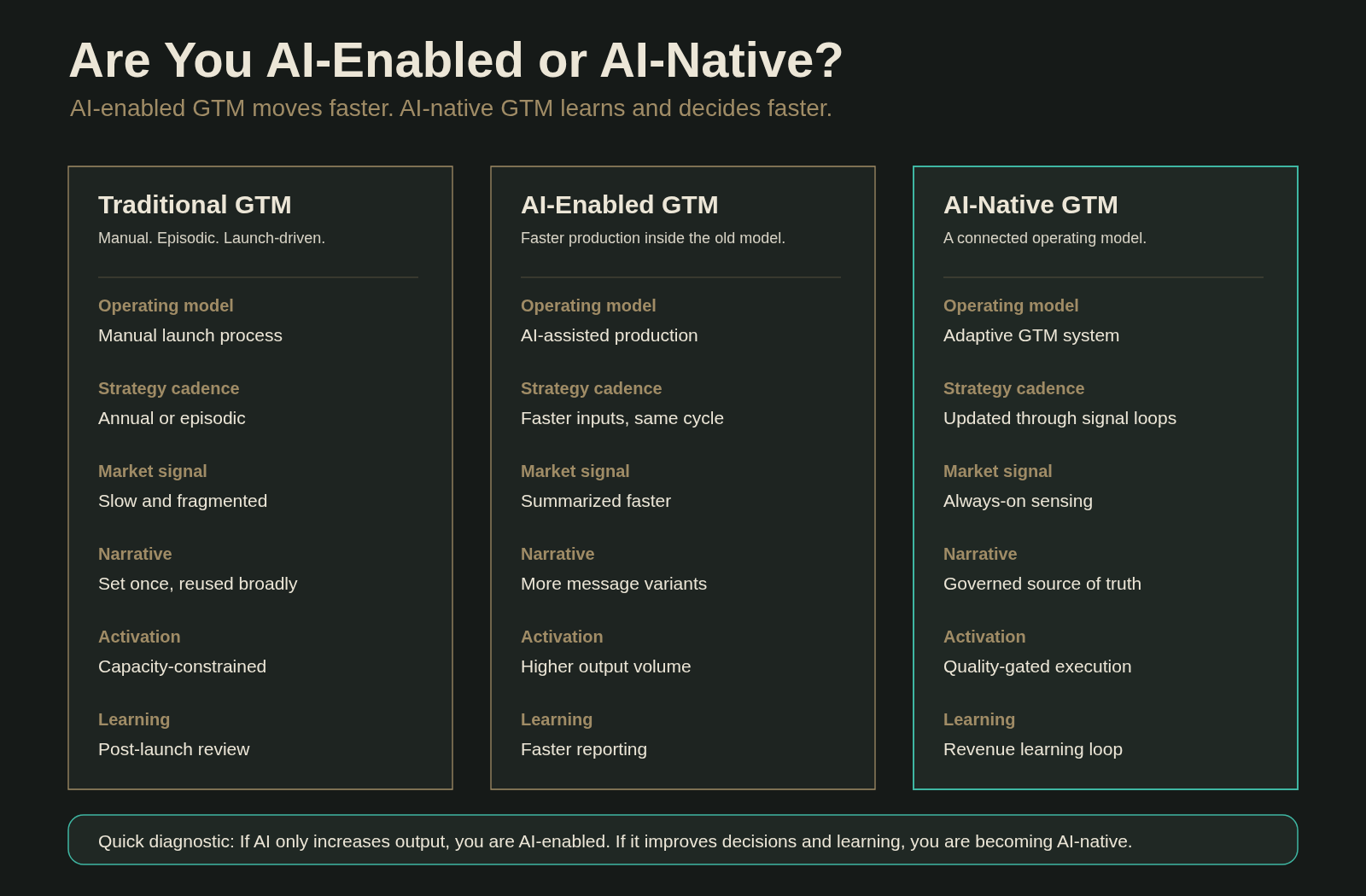
Traditional, AI-enabled, and AI-native GTM compared. - Experience: How AI Impacts GTM Time Allocation(opens in a new tab) - Where recovered capacity goes, and why execution became parallel rather than merely faster.
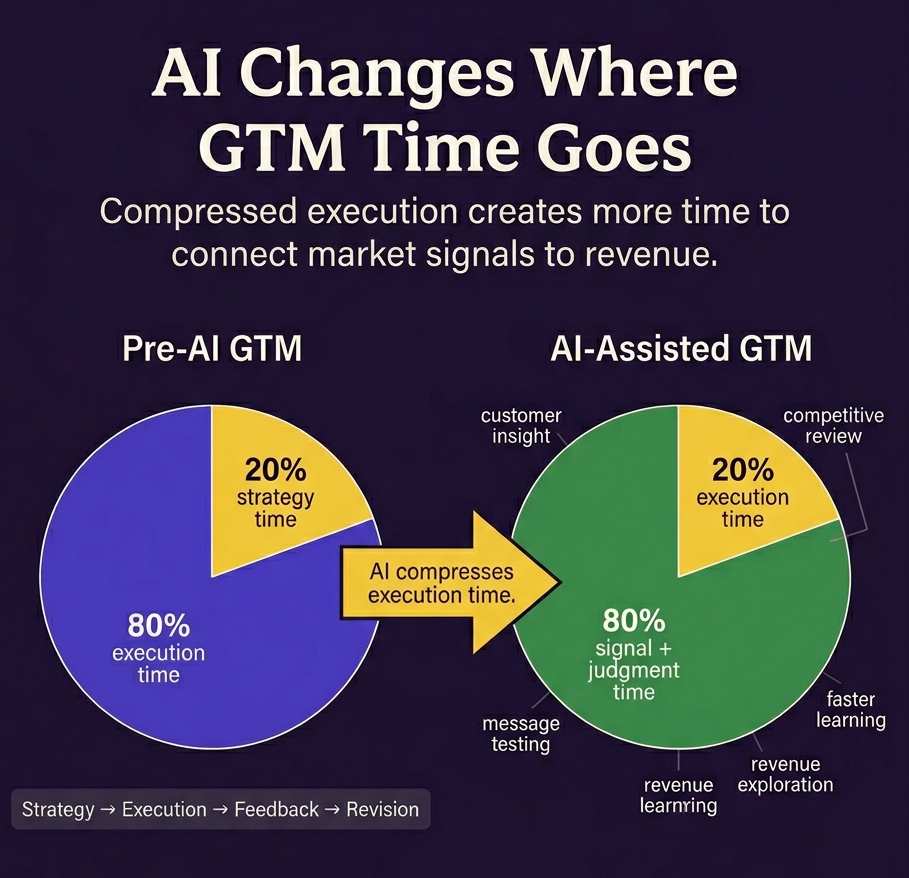
Recovered execution time becomes signal and judgment time. - Experience: How Does AI-First GTM Change Between B2B and B2C?(opens in a new tab) - The operating model changes less than expected. Buyer behavior changes more.
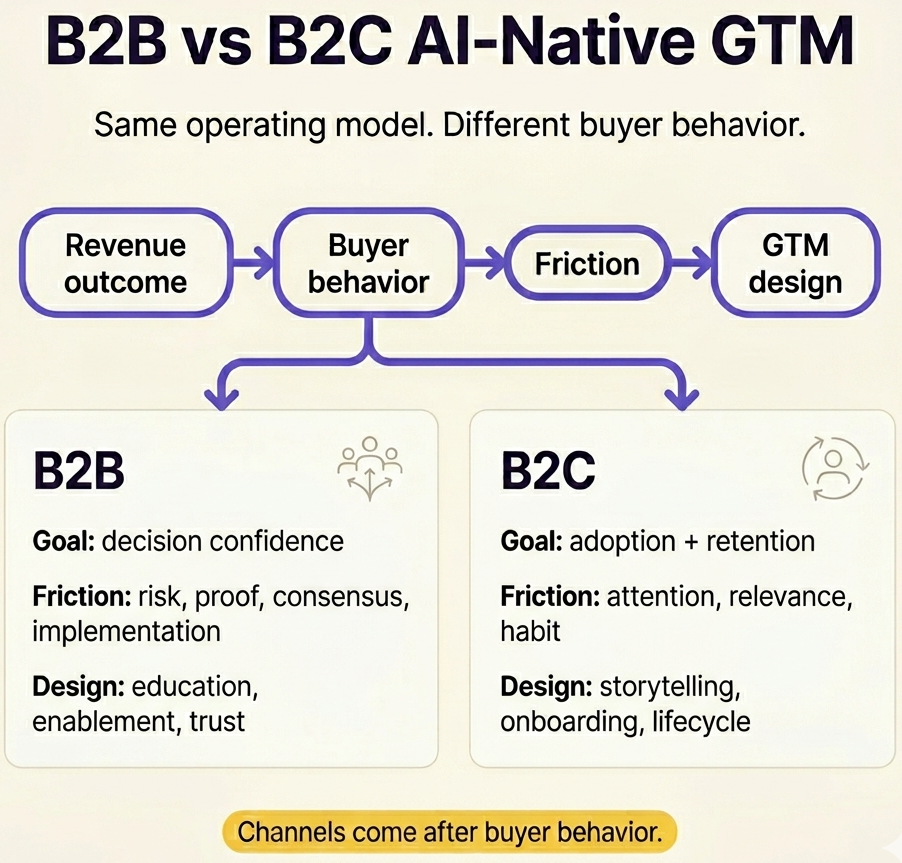
Same operating model, different buyer behavior. - 4 GTM Frameworks: All AI Marketing Is Not One Motion(opens in a new tab) - Four distinct motions collapsed into one phrase, and why the distinction changes what you build.
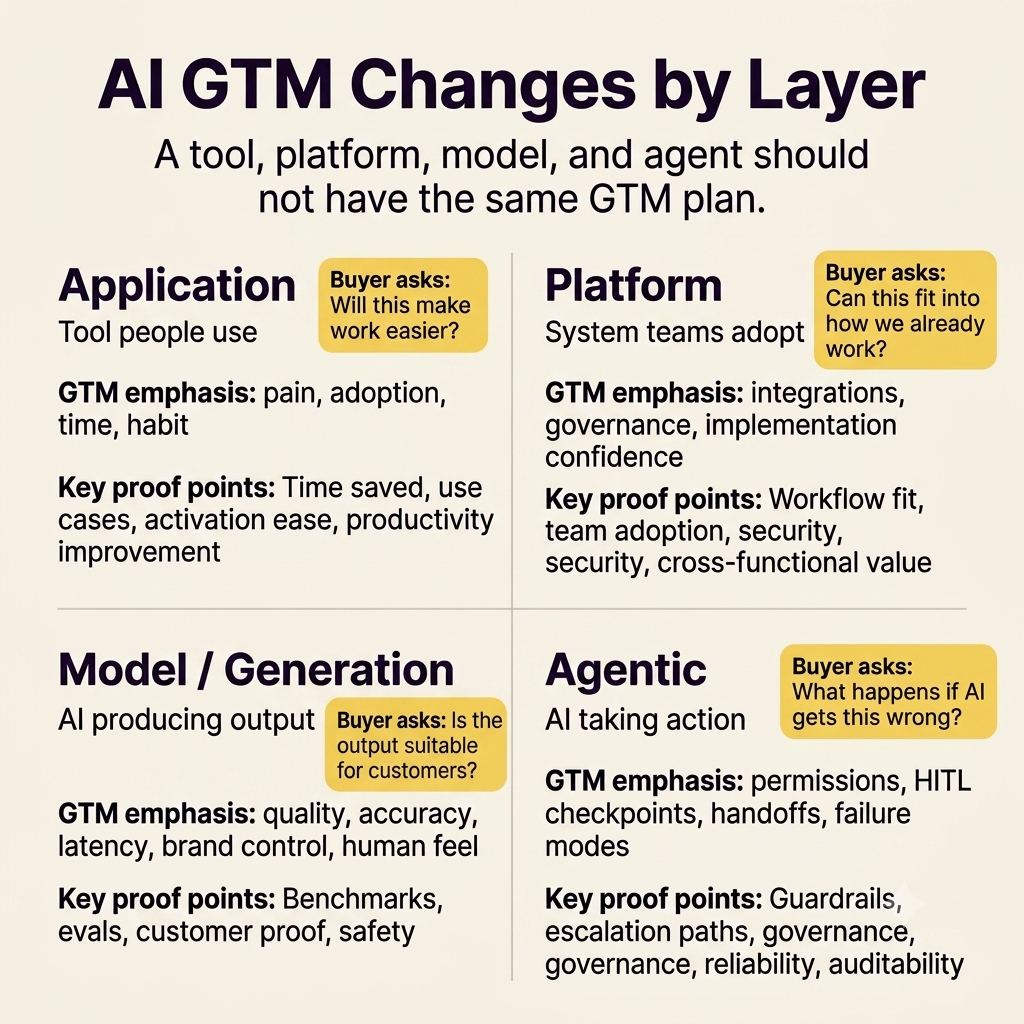
A tool, platform, model, and agent should not share one GTM plan. - Framework: The Best Use of AI in GTM Is...the Challenge.(opens in a new tab) - Using AI to pressure-test the plan, the assumption, and the priority before committing to build.
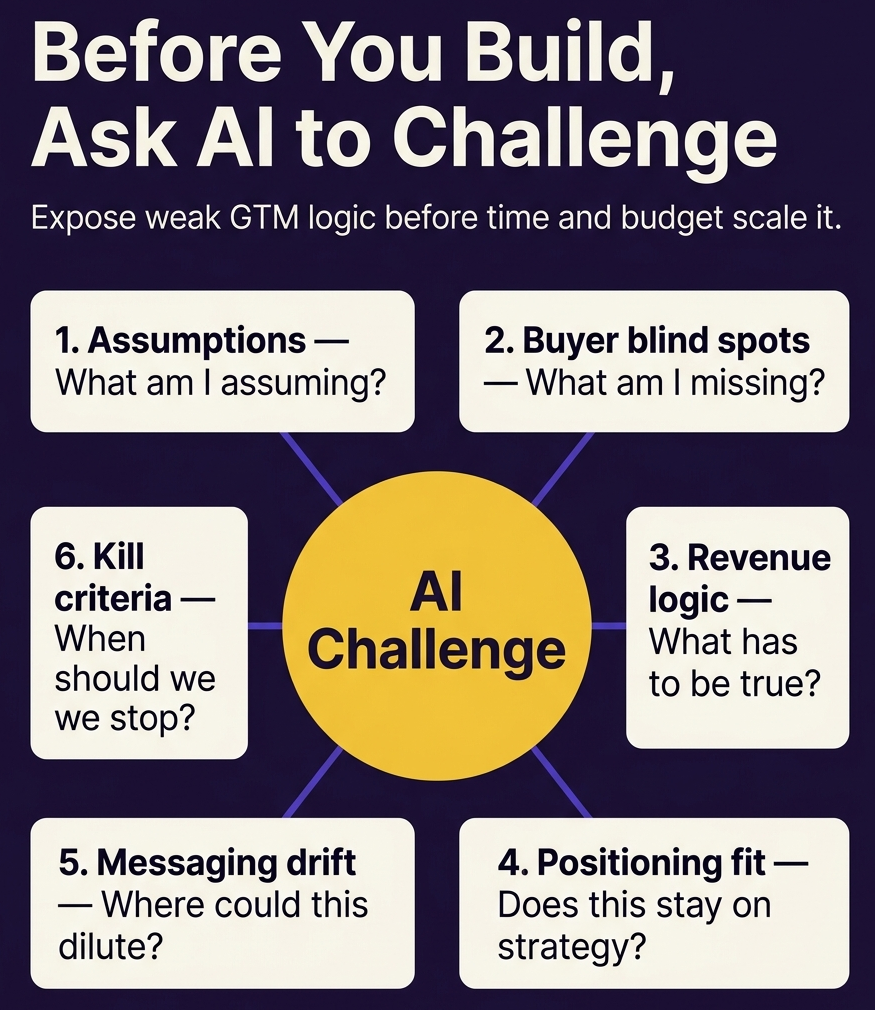
Pressure-test the logic before committing budget. - Perspective: Implementing "Positionless" Marketing(opens in a new tab) - What changes when AI can help break silos across marketing functions, and where that breaks.
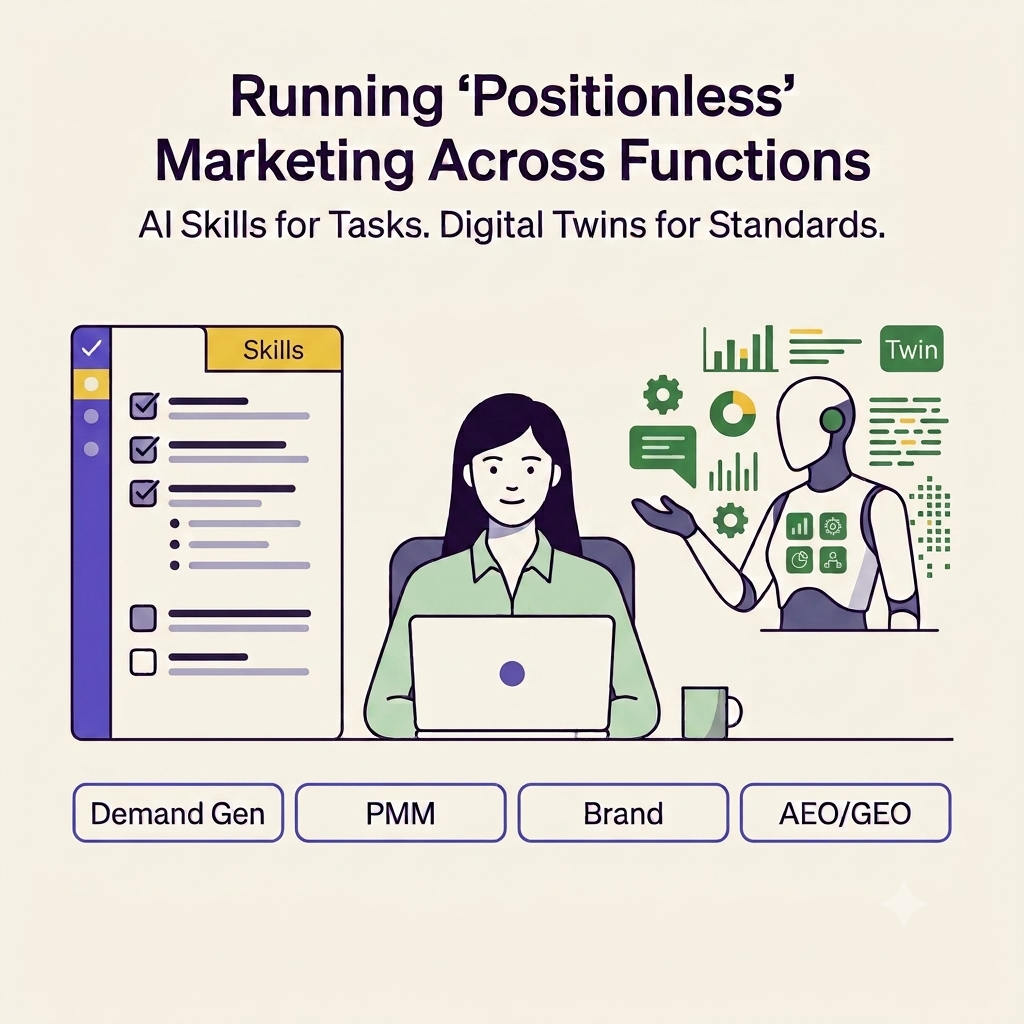
Skills make tasks consistent; twins hold the standards.
Customer Marketing
Turning customer evidence into governed, reusable commercial proof across GTM.
- Shipped ToolTool: Customer Proof AI Layer - the governed proof layer, open source. Built from redesigning how customer marketing operates with AI: deconstruct the jobs to be done, decide where AI acts and where humans decide, then measure whether the function's economics actually changed.
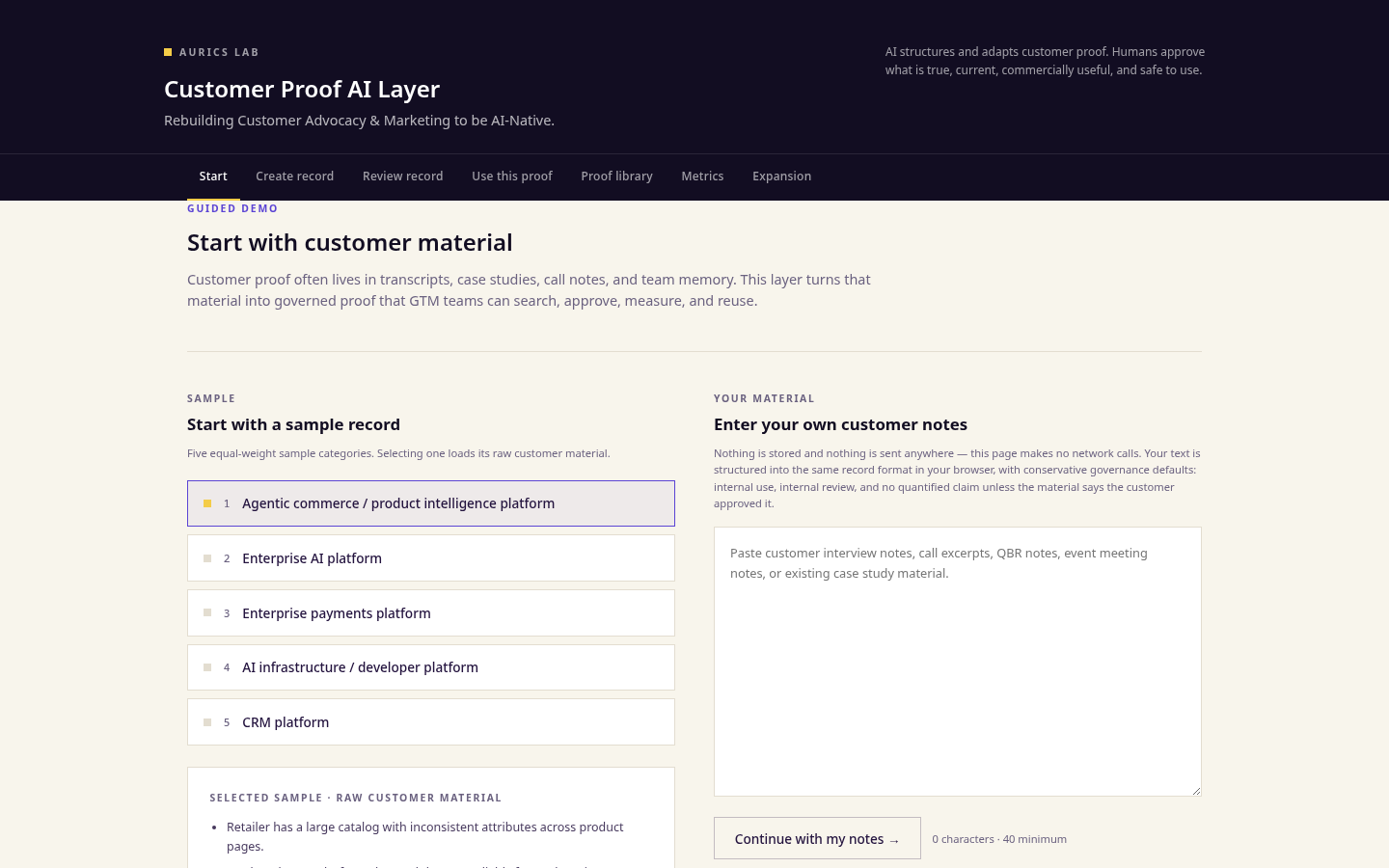
The Customer Proof AI Layer start screen: sample records or your own customer notes. - Building: AI-Native Customer Marketing(opens in a new tab) - Rebuilding with AI creates a moat of verified customer evidence that is searchable, approved, measurable, and reusable. Human judgment still makes the final decision over what gets claimed.
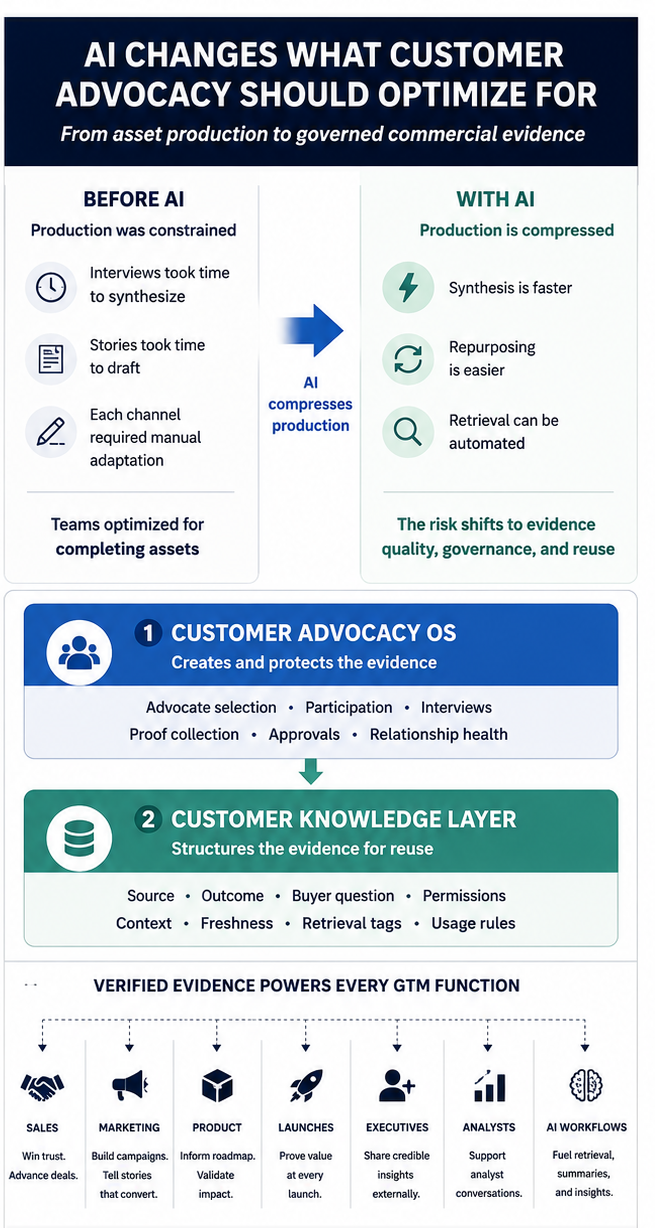
From asset production to governed commercial evidence.
Product Marketing and Narrative
Message consistency, automation, and the systems that keep both governed as volume rises. Repeatable organizational judgment becomes infrastructure; human judgment is reserved for what the system cannot know.
- Shipped ToolTool: Messaging Operating System - Messaging system that generates omnichannel assets from a single narrative source for consistency and speed.
- Shipped ToolTool: Customer Response Engine - playbook-driven response where AI drafts and explains, and humans decide escalation.
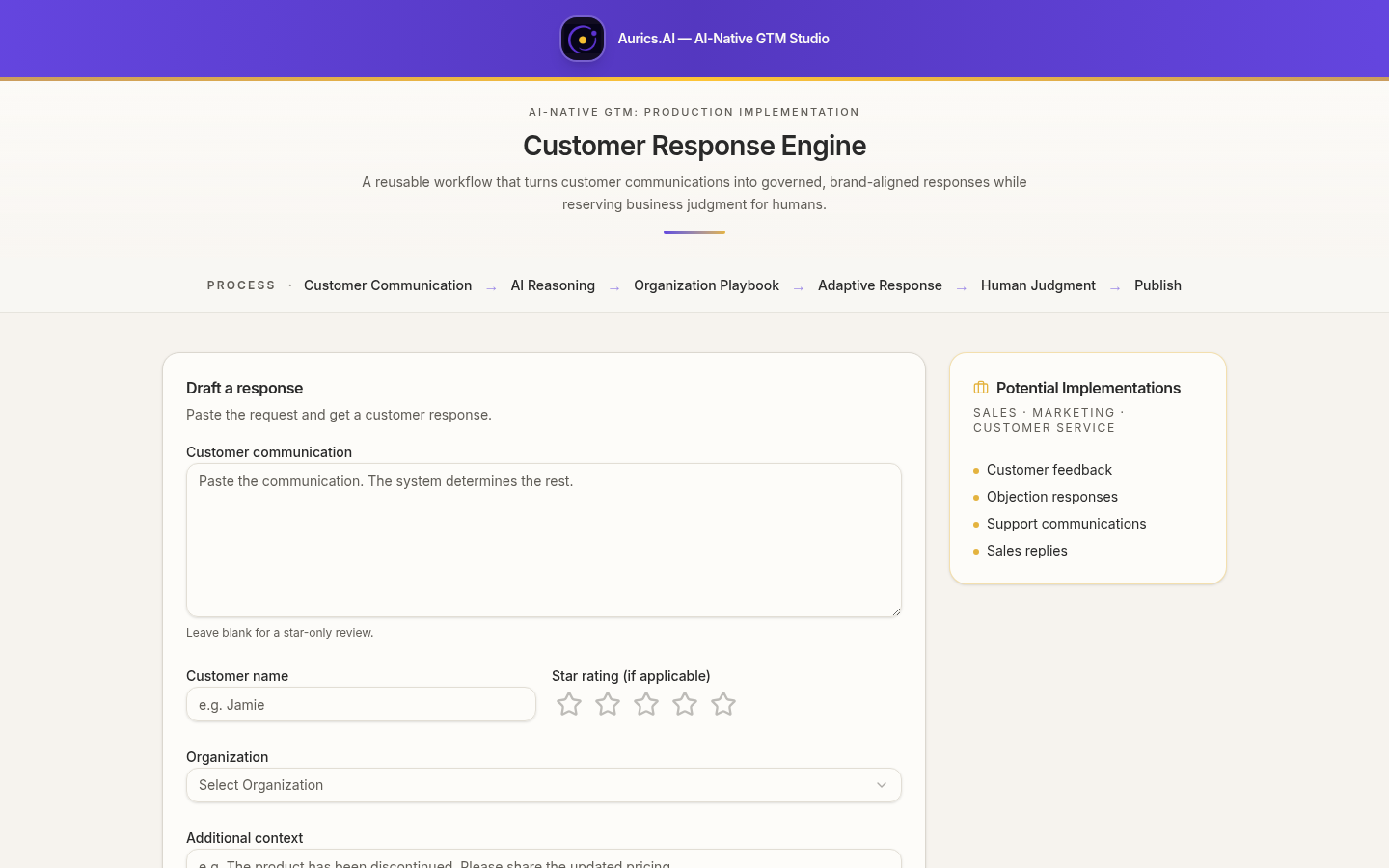
The Customer Response Engine live demo. - Building: AI Automation That Retains Human Judgment(opens in a new tab) - Simplify the underlying system before automating it, so automation doesn't scale the clutter.
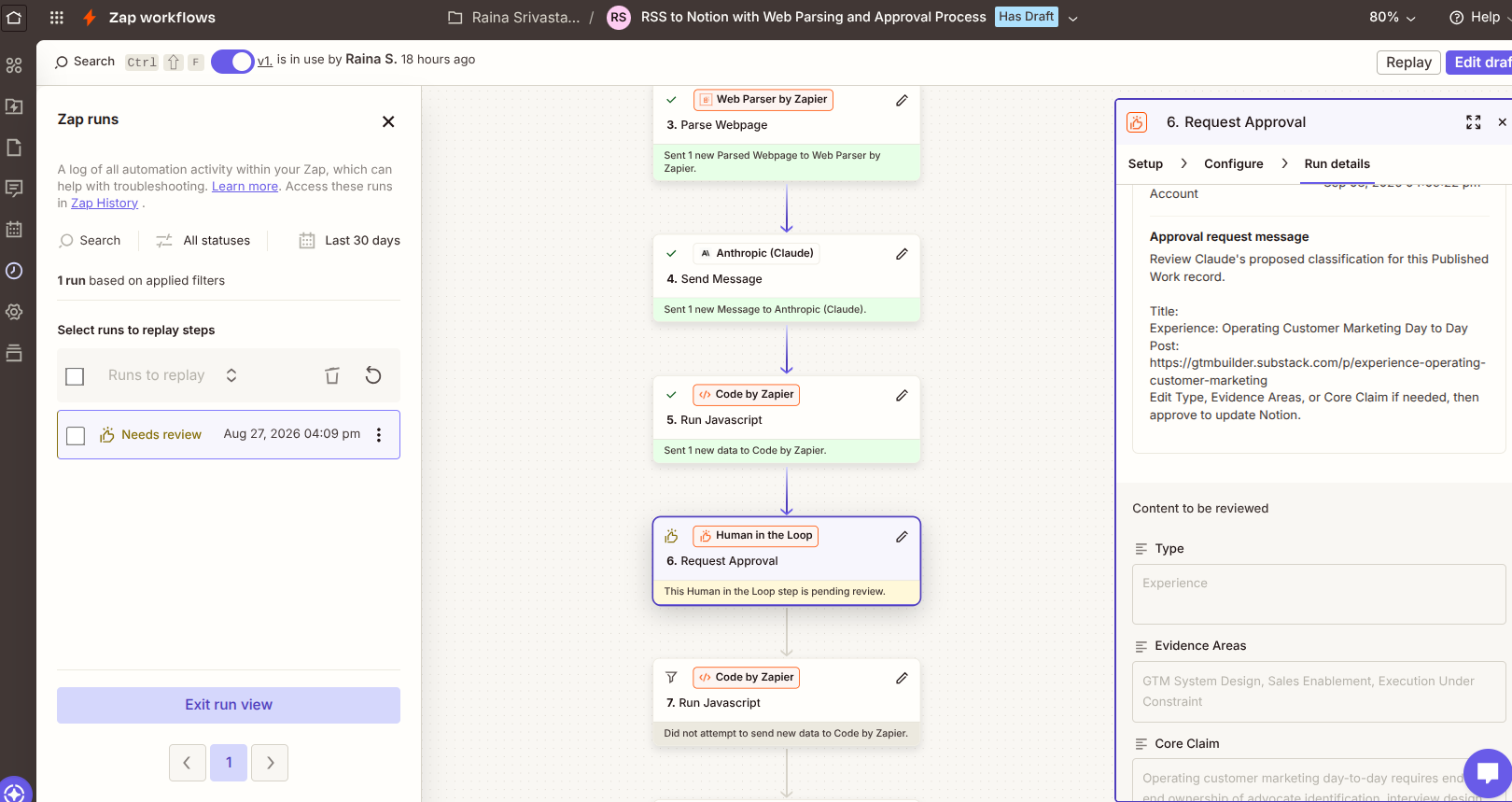
An automated workflow that pauses for human approval before anything is recorded. - Building: Human + AI Business Response Engine(opens in a new tab) - Started as a customer reply tool and became a business response workflow spanning sales, marketing, and customer success. The system does the repeatable reasoning first and surfaces only the decisions a human has to make.
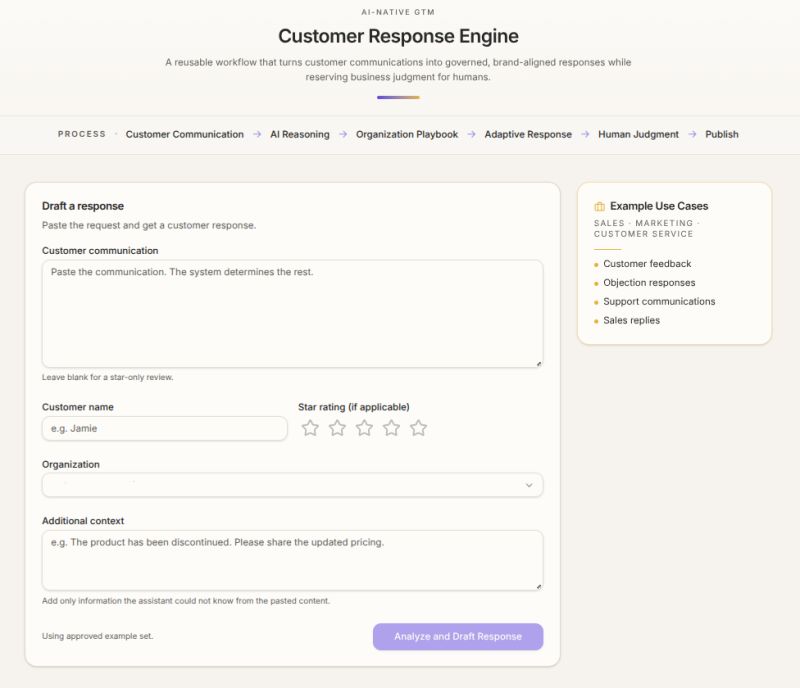
The response workflow, from customer communication to human judgment.
Customer & Market Research
A continuous intelligence layer for research that time zones, availability, and budget would otherwise block.
- Shipped WorkflowBuilding: An AI-Native Research Workflow to Mitigate Typical Constraints(opens in a new tab) - A capacity layer to supplement high-value human interviews.
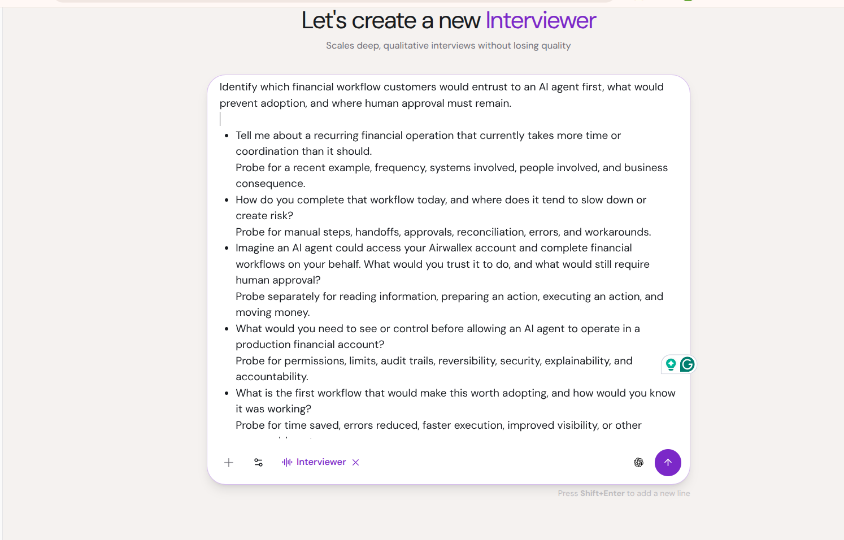
Setting up an AI interviewer with the interview guide.
Search & AI Visibility
Rebuilding the search function for AEO / GEO and optimizing for AI search visibility.
- Best Practices, Checklist, and SkillsAEO & GEO - the repeatable, scalable practice.
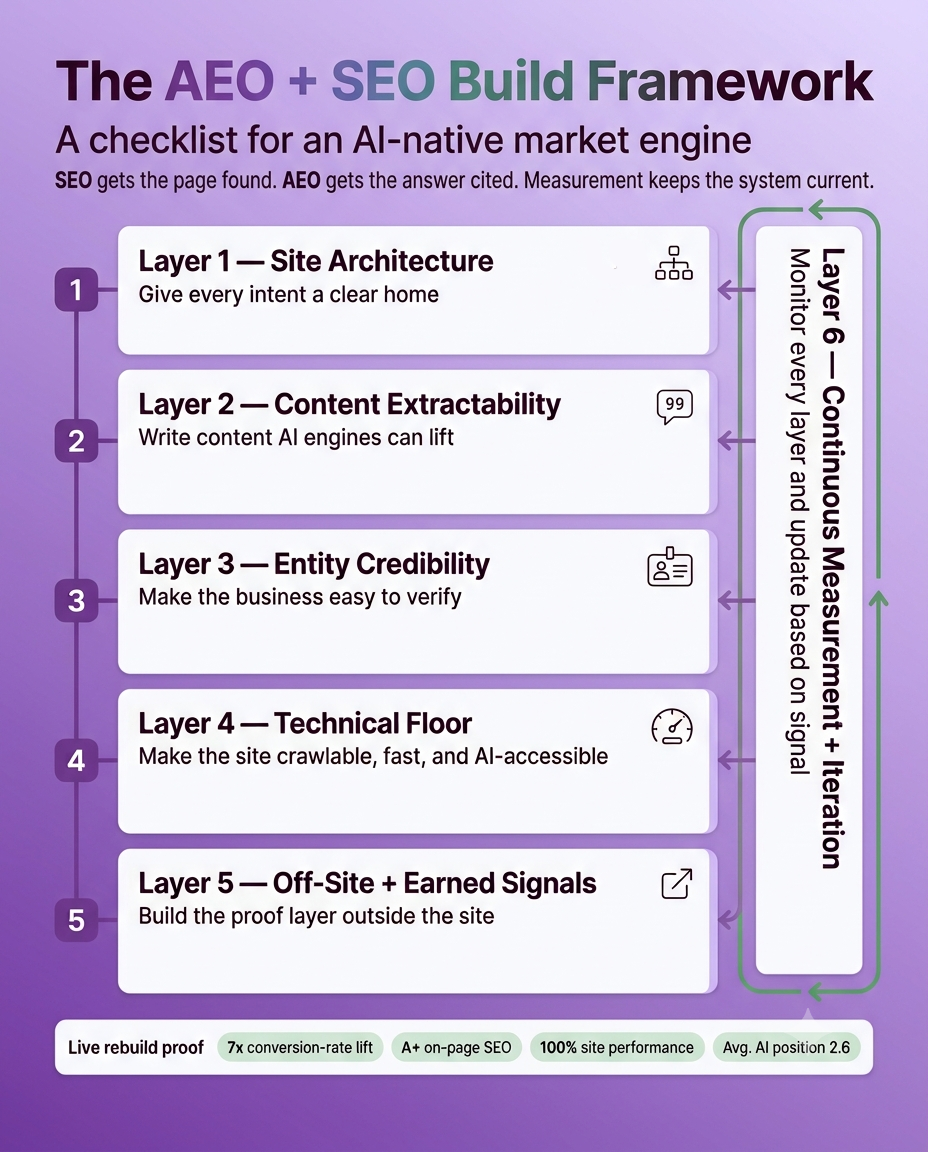
The AEO + SEO build framework. - Shipped ToolTool: AI Visibility Scorecard - the open-source measurement tool.
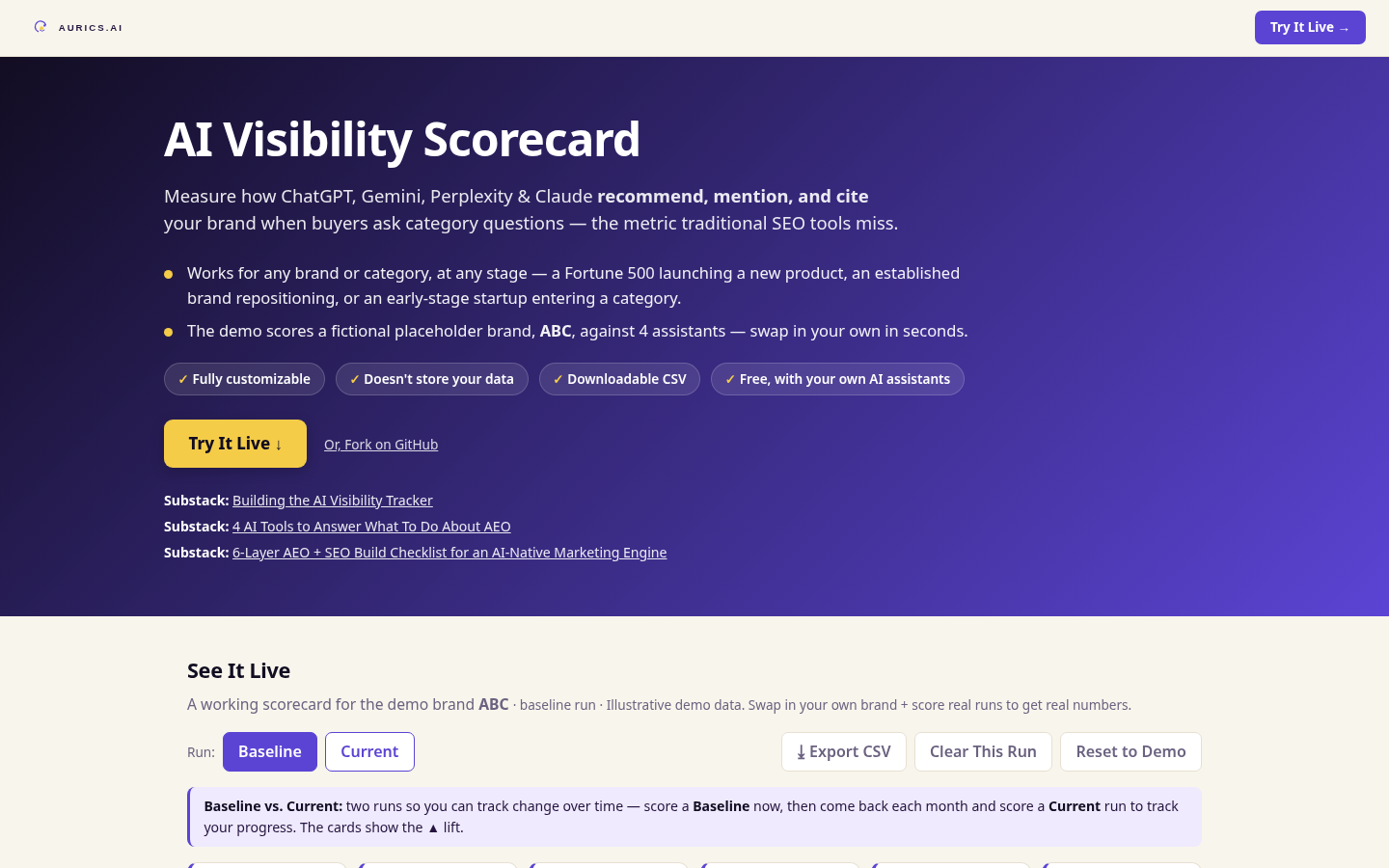
The AI Visibility Scorecard live demo.
Events Marketing
Redesigning event planning, production, and activation, and integrating AI to support pressure testing and asset execution.
- Shipped AssetsExperience: The Event Was Last Minute. The AI-Native Layer Made It Feasible.(opens in a new tab) - One day of lead time. Five decisions made before anything went to print, including killing a printed banner and moving the spend.
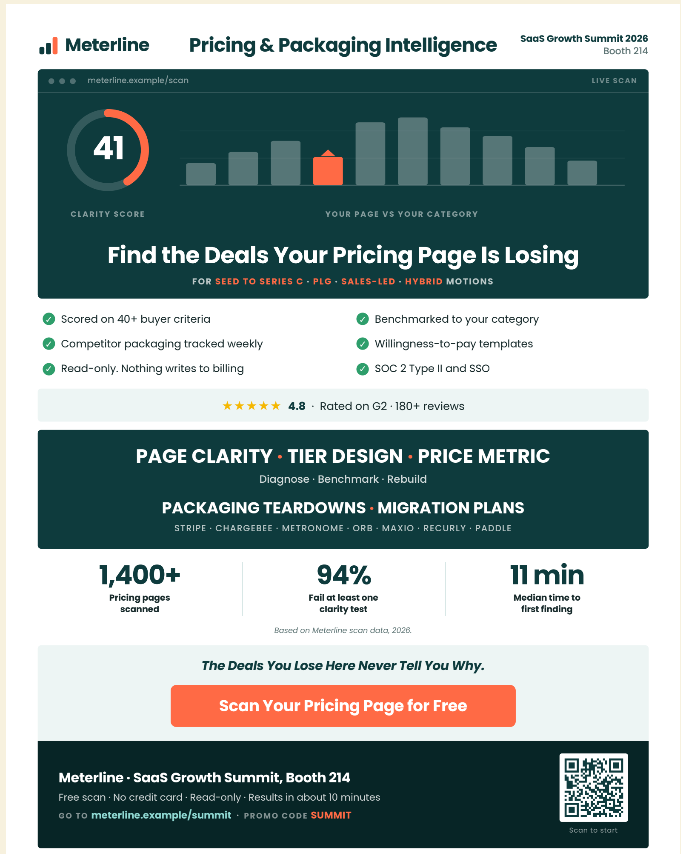
An event asset that switches out confidential information for sample data.
FAQ
- What is AI-First GTM & Marketing?
- It is a Human+AI operating system that redefines go-to-market execution across strategy, messaging, and experimentation, pairing professional judgment with AI as an execution partner.
- What does it cover?
- Research, audience segmentation, asset creation, and workflow automation, run as one system rather than isolated tools.
- How is it different from adding AI tools to an existing GTM stack?
- Tools speed up steps. This changes the operating model, so AI runs inside the workflow while strategic coherence stays owned by humans.
- How is this different from the Marketing & GTM Portfolio?
- The portfolio covers how these functions have been run in-market. This page covers how they are being rebuilt for an AI-Native operating model.
- Where can I see this applied?
- In the B2C Growth Rebuild above, and across each function section.